

Snapchat planets show where you rank on a friend’s Best Friends list. Mercury means you’re their No. 1, followed by Venus (2nd), Earth (3rd), Mars (4th), Jupiter (5th), Saturn (6th), Uranus (7th) and Neptune (8th). The feature is called Friend Solar System, it needs Snapchat+, and the planet describes their list, not yours.
Only a friend’s eight closest Snapchat contacts get a planet. Everyone else gets none. We checked Snapchat’s help pages on 16 October 2026 and took dated screenshots of them for this guide. We don’t have a Snapchat+ account, so there are no planet screens of our own here. Every picture below comes from Snapchat’s help centre, and where those pages say nothing, we tell you.
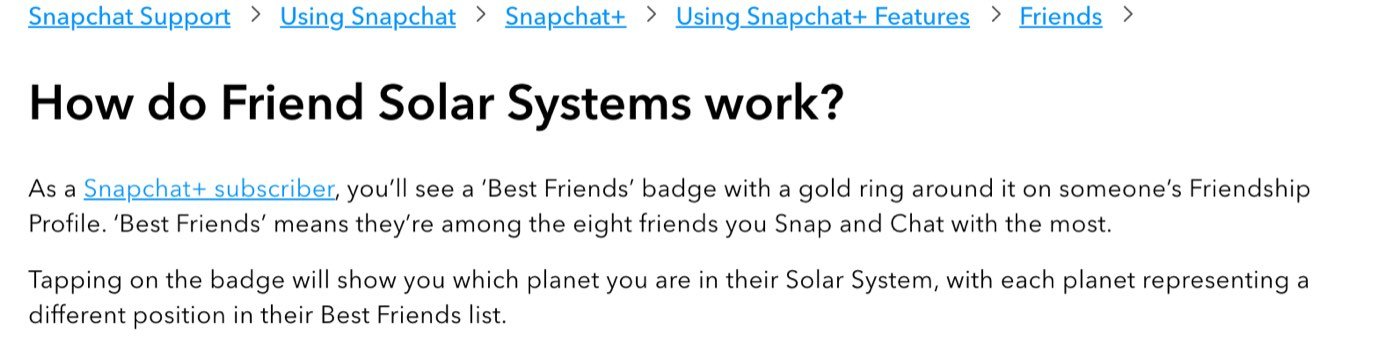
Snapchat's own explanation, from its help centre on 16 October 2026. Read the two sentences closely: the badge is about the eight friends you talk to most, but the planet is your place on their list.
Snapchat planets in order: the full chart
The order is the real solar system’s, counted outward from the Sun. The closer your planet is to the Sun, the closer you are to the top of your friend’s list.
| Planet | Your place on their list | What it tells you | How Snapchat draws it |
|---|---|---|---|
| Mercury | 1st | You’re the person they Snap and Chat with most | Small cratered planet, circled by red hearts |
| Venus | 2nd | You’re their second-closest contact | Sandy, banded planet with pink, yellow and blue hearts |
| Earth | 3rd | You’re third on their list | Blue and green globe with the Moon and red hearts |
| Mars | 4th | You’re fourth, the last of the “heart” planets | Red planet with blue and purple hearts |
| Jupiter | 5th | You’re fifth, the first of the outer four | Striped orange planet with stars, no hearts |
| Saturn | 6th | You’re sixth | Golden planet with rings and a few stars |
| Uranus | 7th | You’re seventh | Green planet with sparkles |
| Neptune | 8th | You’re eighth, the last Best Friend spot | Deep blue planet with sparkles |
If you learned the planets at school with “My Very Educated Mother Just Served Us Nachos”, you already know the full ranking. There is no Pluto: eight planets, eight Best Friends.
What are Snapchat planets?
Snapchat planets are the pictures in the Friend Solar System, a Snapchat+ feature that tells a subscriber where they rank among a friend’s Best Friends. The friend is the sun. You are on a planet, and the planet is set by how much that friend Snaps and Chats with you compared with everyone else they know on Snapchat.
The ranking underneath is not new, and it isn’t paid. Every Snapchat account has a Best Friends list. Snapchat builds it from the people you Snap and Chat with most, keeps it to eight names, and shows it only to you. What Snapchat+ adds is a look at one number you’d normally never see: your own position on somebody else’s list.
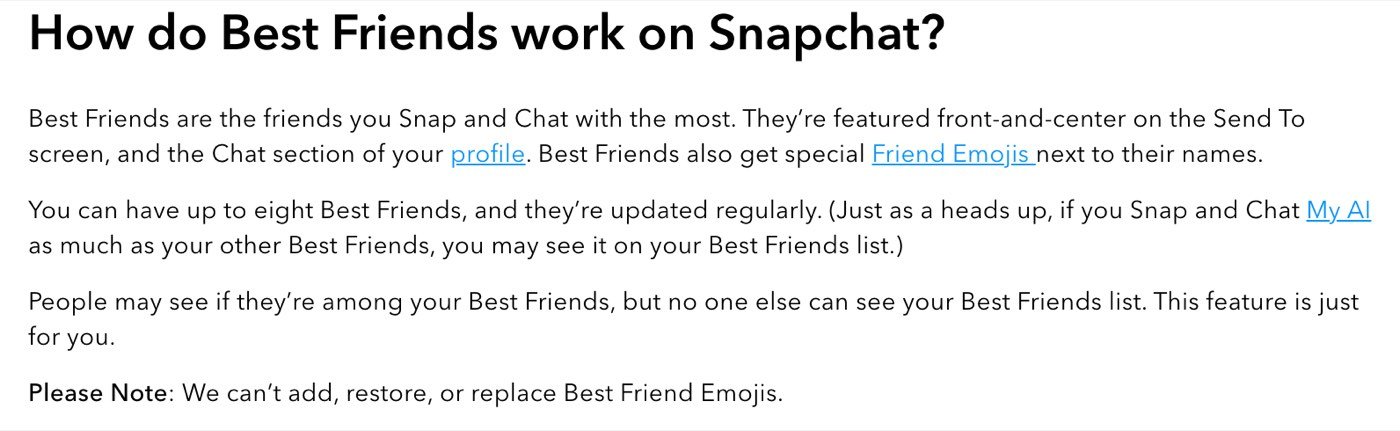
Snapchat's Best Friends page, 16 October 2026. The planets are built on this list: up to eight people, "updated regularly", private to its owner except for each person's own place in it.
That last line on the page is the key to the whole feature. Snapchat says “People may see if they’re among your Best Friends, but no one else can see your Best Friends list.” The Solar System is the paid, more detailed version of the first half of that sentence.
How the Friend Solar System works
Snapchat’s help page describes it in three steps:
- Everyone has a Best Friends list. Up to eight people, chosen by who you Snap and Chat with most, and updated regularly.
- Subscribers see a badge. A Snapchat+ subscriber with Solar System switched on sees a “Best Friends” badge with a gold ring on the Friendship Profile of someone in their own top eight.
- Tapping it shows a planet. The pop-up puts the friend in the sun and the subscriber on a planet. Snapchat’s words: “Tapping on the badge will show you which planet you are in their Solar System, with each planet representing a different position in their Best Friends list.”
Only the person looking needs Snapchat+. The help page sets no condition on the friend whose system it is, so a free account still has a solar system, and subscribers can see their own place in it.
What Snapchat doesn’t publish is the formula. It doesn’t say how a Snap is weighed against a chat message, whether calls or video chats count, how far back it looks, or how often the list refreshes. “Updated regularly” is as specific as it gets. Anyone who tells you the exact maths is guessing.
Whose list is it? The part most people get backwards
Your planet is your place on their list. It says nothing about where they sit on yours.
Say you’re Earth in Sam’s solar system. That means you’re third among the people Sam talks to most. Sam might be your Mercury at the same time, because rankings aren’t mutual. You could message Sam more than anyone, while Sam messages two other people more than you.
To see your own top eight you don’t need planets at all. Your Best Friends sit at the front of the Send To screen and in the Chat section of your profile, for free. Snapchat also marks them with friend emojis, which we cover further down.
Mercury: 1st Best Friend

Mercury, from the planet guide on Snapchat's help page, 16 October 2026. A large sun and red hearts all round mark first place.
Mercury means you are this friend’s No. 1 Best Friend: the person they Snap and Chat with more than anyone else. It’s the planet everyone hopes for. Snapchat draws it small and cratered, ringed with red hearts, beside a large sun.
If they’re your No. 1 as well, you don’t need Snapchat+ to know it. Snapchat shows a yellow heart next to their name for free when you’re each other’s No. 1. Hold that for two weeks and it turns into a red heart. Hold it for two months and you get pink hearts.
Being someone’s Mercury measures volume, not feeling. A sibling who sends you twenty dull Snaps a day can outrank a best friend you see every weekend.
Venus: 2nd Best Friend
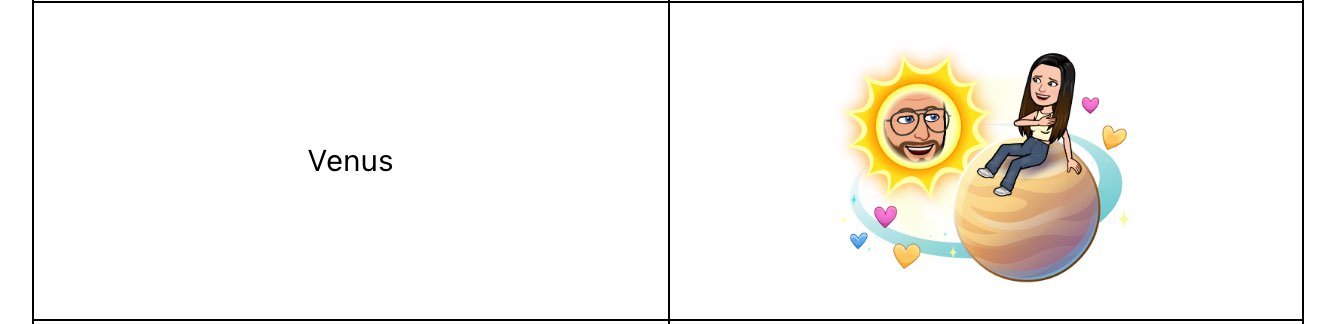
Venus in Snapchat's planet guide, 16 October 2026. Mixed pink, yellow and blue hearts mark second place.
Venus means you’re second on their list. You’re one of the two people they talk to most on Snapchat.
First and second place swap more easily than any other pair. The gap between them is often a single busy weekend, a group project or a cousin visiting for the summer. So a drop from Mercury to Venus usually reflects a change in who else they’re messaging, not a change in how they feel about you.
Earth: 3rd Best Friend

Earth, as Snapchat's help page shows it on 16 October 2026. It's the only planet drawn with a moon.
Earth means you’re third. You’re still in the inner circle, ahead of five other Best Friends.
Earth gets more over-reading than any other planet. Its image is the most detailed, and people joke that being someone’s Earth means being their whole world. It doesn’t. In the ranking it is simply the third rung, no more special than Venus above it or Mars below.
Mars: 4th Best Friend

Mars in Snapchat's guide, 16 October 2026. It's the last planet with hearts. From Jupiter outward they become stars.
Mars means you’re fourth, at the bottom of the top half. You’re one of their four most-messaged people out of everyone they have on Snapchat.
Snapchat seems to treat Mars as a border. It is the last planet with hearts in its picture. The four inner planets, Mercury to Mars, all get them, and the four outer ones get stars and sparkles instead. That is a design choice, not a separate tier in the ranking, but it’s why Mars can feel like a bigger drop from Earth than it really is.
Jupiter: 5th Best Friend

Jupiter, from Snapchat's help page on 16 October 2026. The hearts are gone and the sun is starting to shrink.
Jupiter means you’re fifth on their list, the first of the outer four planets.
Fifth still means you’re in their top eight out of everyone on their friends list, which for most people runs to dozens or hundreds of names. If you see Jupiter and feel let down, remember that their first four places may be a partner, a sibling and two people they share a class or job with.
Saturn: 6th Best Friend
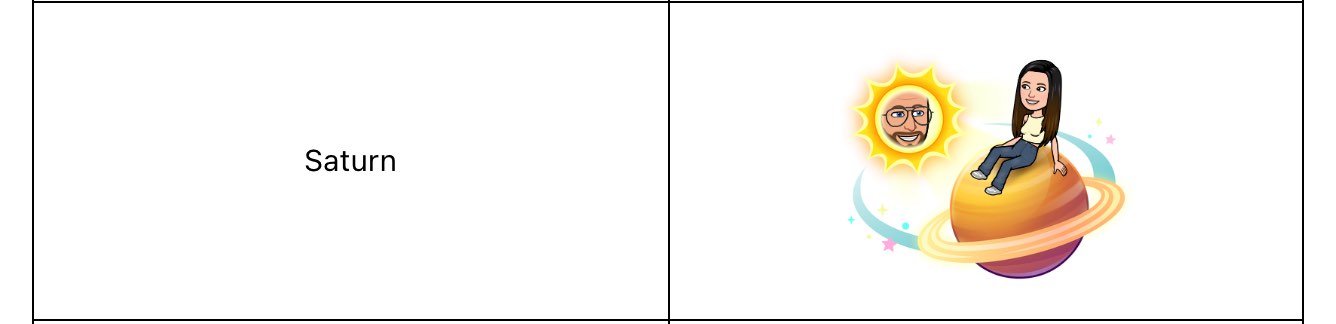
Saturn in Snapchat's planet guide, 16 October 2026, recognisable by its rings.
Saturn means you’re sixth. Its rings make it the easiest planet to recognise.
The outer places are usually the easiest to gain or lose. It can take only a few Snaps to separate the sixth friend on a list from the ninth, who has no planet at all. Seeing Saturn one week and nothing the next is normal.
Uranus: 7th Best Friend

Uranus in Snapchat's help centre, 16 October 2026: a plain green planet with sparkles.
Uranus means you’re seventh, the second-last Best Friend spot.
When TechCrunch covered the feature in April 2024, it used Uranus as its example of “someone not as close”. That’s fair as far as message counts go. But seventh out of hundreds of contacts is still a friend they talk to more than nearly everyone else.
Neptune: 8th Best Friend
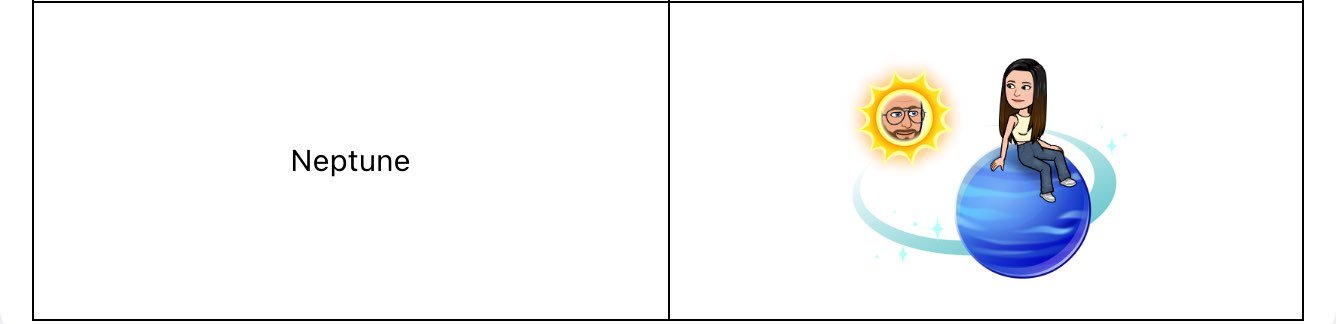
Neptune, the last row of Snapchat's planet guide, 16 October 2026. The sun is about as small as it gets.
Neptune means you’re eighth, the last place on their Best Friends list. You made the top eight, just.
There is no ninth planet. One place lower and you wouldn’t appear in their solar system at all. That is why Neptune tends to come and go more than the others.
The hearts, stars and shrinking sun in each picture
Put the eight images side by side and Snapchat’s design is consistent:
- The sun is your friend. In every image their Bitmoji sits inside the sun. Yours sits on the planet.
- Hearts mean the top four. Mercury, Venus, Earth and Mars all have hearts. Jupiter, Saturn, Uranus and Neptune have stars or sparkles instead.
- The sun shrinks with distance. It’s drawn biggest beside the inner planets and smallest beside the outer ones.
This helps when someone sends you a screenshot of their planet and you can’t tell Uranus from Neptune. Count the hearts, check the sun’s size, and look for rings or a moon.
Do you need Snapchat+ to see planets?
Yes. Solar System is listed among Snapchat+ (Snapchat Plus) features on Snapchat’s own help page, and there is no free version.
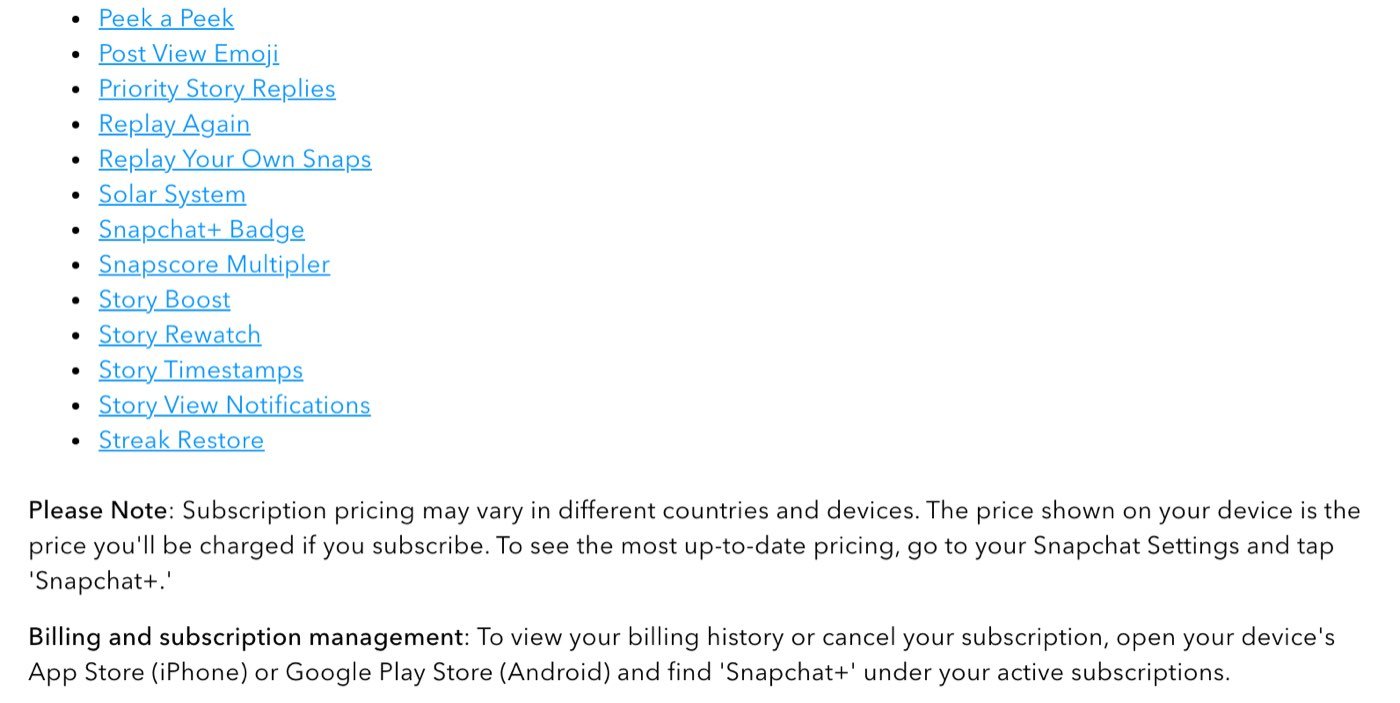
Part of the Snapchat+ feature list on Snapchat's help page, 16 October 2026, with Solar System in the middle. The note below the list explains why we don't quote one price.
Snapchat doesn’t publish a single price. Its help page says “Subscription pricing may vary in different countries and devices.” The price that counts is the one shown in your app: open Settings and tap Snapchat+. The same page lists a higher Platinum plan, which adds no Sponsored Snaps and no Story or Lens ads. It also mentions promo codes and a “Gift Snapchat+” option.
If you subscribe in the app, billing and cancelling happen in the App Store on iPhone or Google Play on Android, not inside Snapchat. Subscriptions bought on Snapchat’s website are managed from your account there.
How to turn on Snapchat planets
- Subscribe to Snapchat+. Go to your Profile, tap the Snapchat+ banner card at the top and choose a subscription. Snapchat notes you might need to restart the app before the Snapchat+ options appear.
- Switch Solar System on. It is off by default for first-time subscribers. Snapchat says to turn it on from the Snapchat+ feature management page. Its help pages reach that page by tapping the Snapchat+ membership card in your Profile.
- Open a friend’s Friendship Profile. Open your chat with them and tap their name or Bitmoji at the top.
- Tap the gold-ringed Best Friends badge. In Snapchat’s example it sits in a row of small labels under the friend’s name, next to their Snapscore and star sign. The pop-up shows your planet.
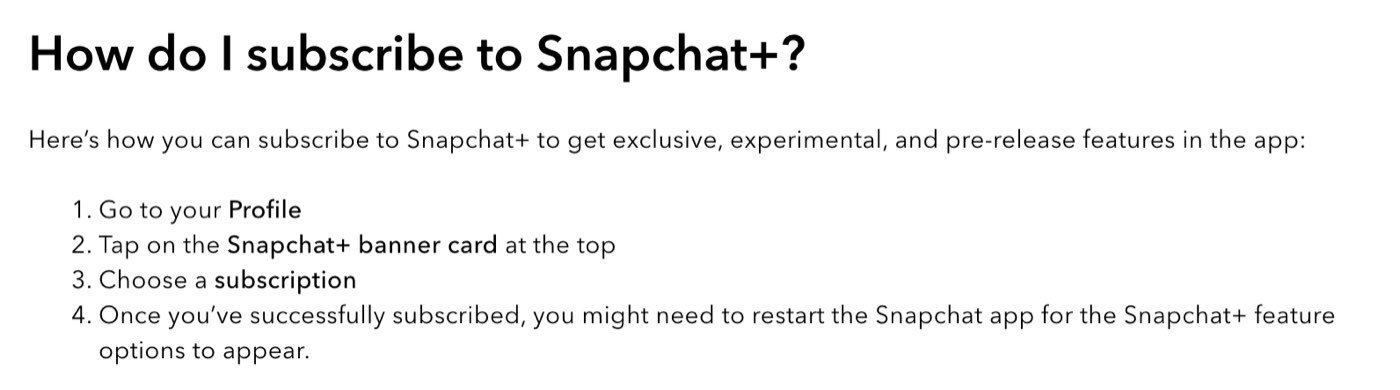
Snapchat's subscribe steps, as shown on its help page on 16 October 2026.
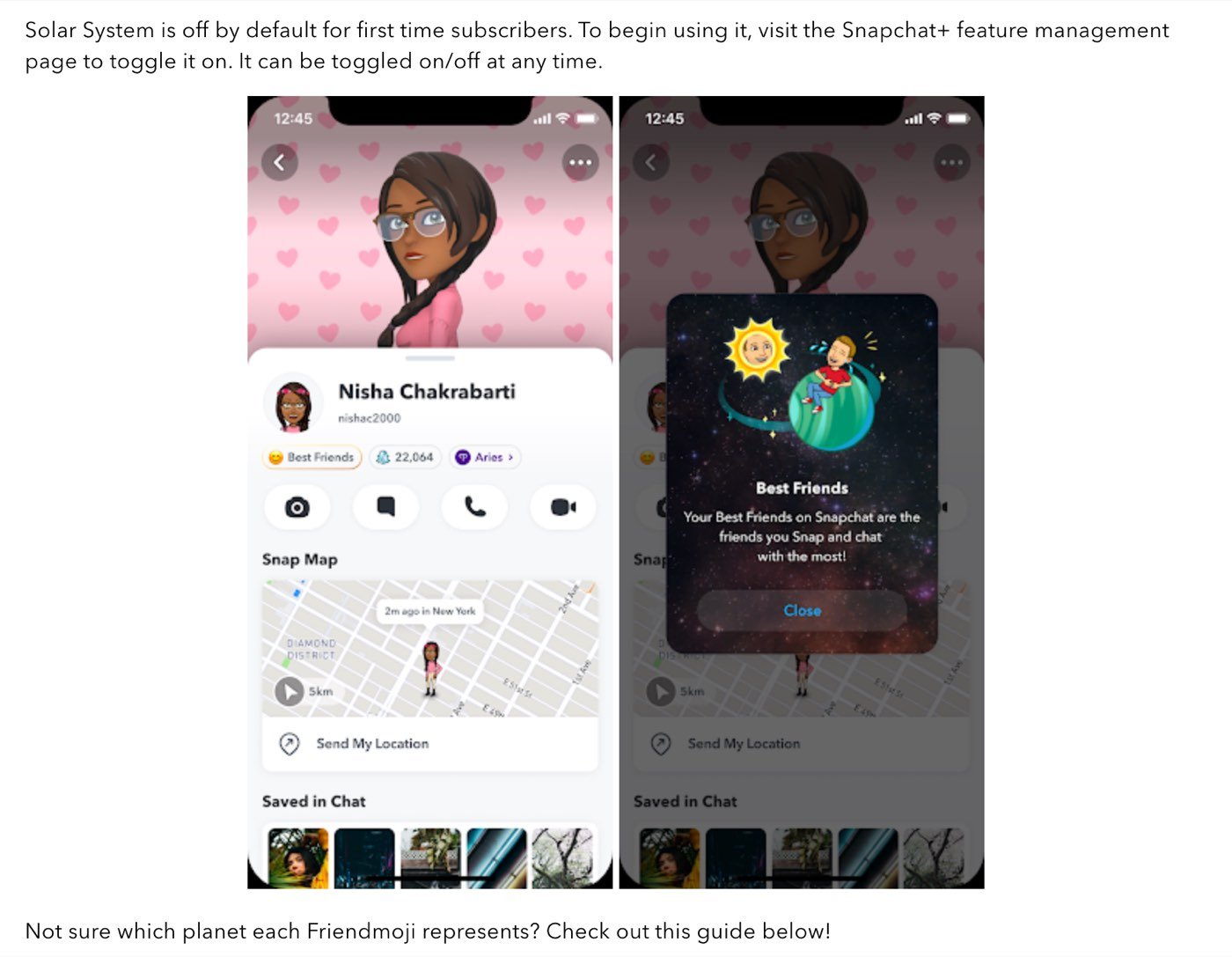
Snapchat's example screens, from its help page on 16 October 2026. On the left, the Best Friends badge sits under the friend's name. On the right is the pop-up that opens when you tap it. These are Snapchat's demo images, not our account.
How to turn Snapchat planets off
Use the same switch. Snapchat says Solar System “can be toggled on/off at any time” from the Snapchat+ feature management page. Switching it off stops you seeing planets.
Snapchat’s help pages don’t say that switching it off hides your own list from subscribers who have it on. If you don’t subscribe at all, there is no switch to touch.
Why Snapchat made planets off by default
The Solar System used to be on for every subscriber. That changed in April 2024. The Wall Street Journal reported that the feature was adding to teenagers’ anxiety about where they stood with friends. Less than a week later, on Friday 5 April 2024, Snap said it would turn the feature off by default.
TechCrunch’s report quoted Snap: “We’ve heard and understand that the Solar System can make that feeling worse, and we want to avoid that.” TechCrunch also reported Snap saying that less than 0.25% of its community used the feature. Snapchat’s help page carries the same rule today: off by default for first-time subscribers, on only if you choose it.
Why your Snapchat planet changes
Planets move because Best Friends lists move. Snapchat says they’re “updated regularly”, and these are the usual reasons a planet shifts:
- They started talking to someone else more. The ranking is about their messages to everyone, not just you. A new partner, a new class or a holiday with cousins can push you down without you doing anything.
- You’ve been quieter. Fewer Snaps and chats with them means less weight on your side.
- My AI took a seat. Snapchat says that if someone Snaps and Chats My AI as much as their other Best Friends, it may appear on their Best Friends list. That means a chatbot can hold one of the eight spots.
- Timing. Snapchat doesn’t say how often the list updates or how far back it looks, so a change can show up a day or two after the conversation that caused it.
Can you climb to Mercury?
The only lever is talking with them more. Even then, the ranking counts their messages to everyone. You can’t out-Snap their partner or a sibling they live with.
Streaks don’t settle it either. Snapchat’s friend emoji guide describes a streak as days in a row of Snapping each other. It doesn’t tie streaks to Best Friends rank. A long streak with someone who chats with five other people all day won’t make you their Mercury.
The healthier move is to treat the planet as a weather report, not a score.
The Best Friends badge, and the “Friends” badge you may hear about
Snapchat documents one badge: “Best Friends”, with a gold ring. Its own wording ties that badge to your top eight and the planet behind it to their top eight.
It doesn’t describe what happens when the two don’t match. That covers someone in your top eight when you’re not in theirs, or the reverse. Many unofficial guides describe a plain “Friends” badge for some of those cases. We couldn’t test it without a subscription, and Snapchat’s help pages don’t mention it, so treat it as reported, not confirmed.
Snapchat planets vs friend emojis
Friend emojis are the free cousin of planets. They appear next to names for every user, and a few of them reveal the same thing a planet would.
| Emoji | Snapchat’s name | What it tells you | What it means for planets |
|---|---|---|---|
| 💛 | Besties | You’re each other’s No. 1 Best Friend | You’re their Mercury |
| ❤️ | BFF | Each other’s No. 1 for two weeks in a row | You’re their Mercury |
| 💕 | Super BFF | Each other’s No. 1 for two months in a row | You’re their Mercury |
| 😊 | BFs | They’re one of your Best Friends | Says nothing about their list |
| 😬 | Mutual Besties | Your No. 1 is also their No. 1 | Says nothing about your planet |
| 😎 | Mutual BFs | One of your Best Friends is also one of theirs | Says nothing about your planet |
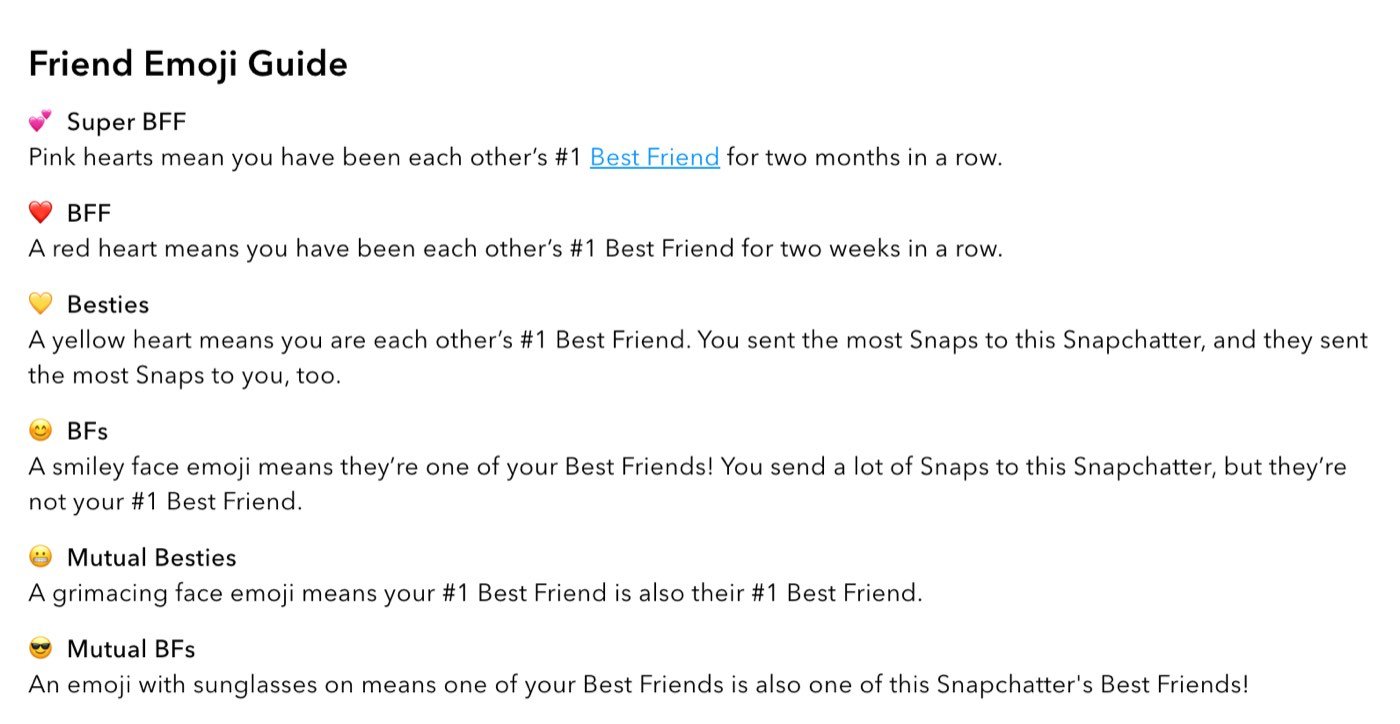
Snapchat's friend emoji guide, 16 October 2026. The three hearts all mean "each other's #1", which is the free way to know you're someone's Mercury.
Extended Best Friends List: your own top 16
Planets show your place on someone else’s list. Snapchat+ has a second feature that does the opposite and shows your own list in more detail.
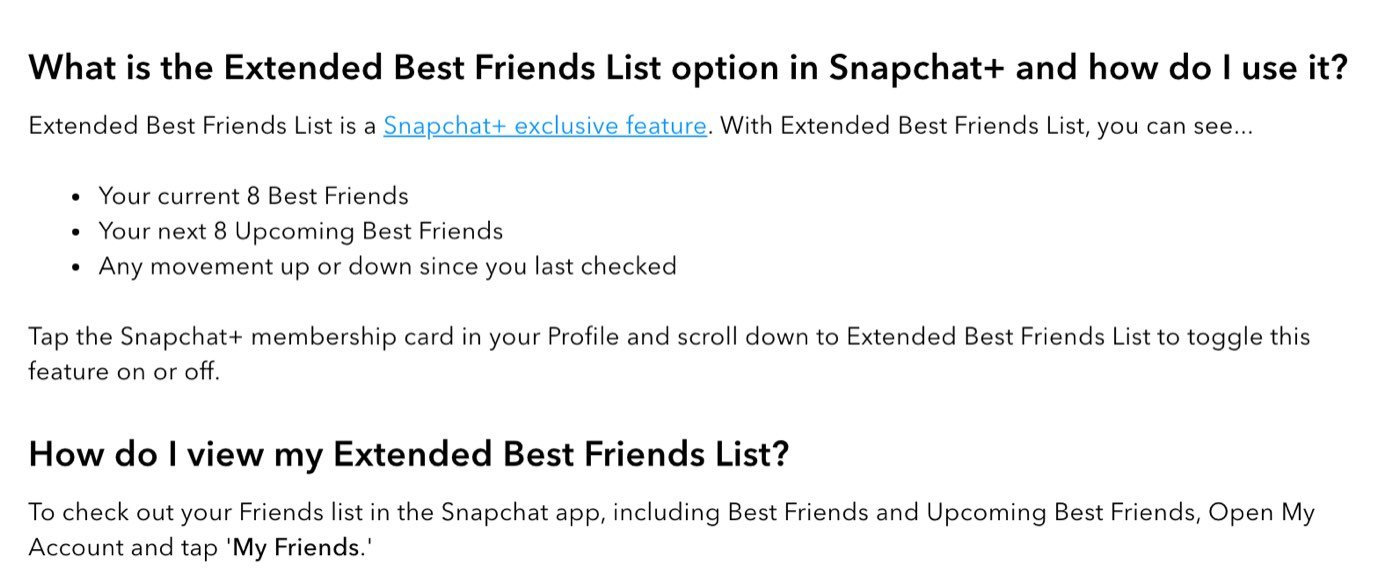
Extended Best Friends List on Snapchat's help page, 16 October 2026. It shows sixteen names and the movement between them, but only on your own list.
Extended Best Friends List shows your current eight Best Friends, the next eight “Upcoming Best Friends”, and who has moved up or down since you last looked. It’s switched on from the Snapchat+ membership card, and the list itself lives under My Account, then My Friends. The “upcoming” eight are the people closest to entering your top eight, and so to getting a planet in your solar system.
Can you see Snapchat planets without paying?
Not the planets themselves. Snapchat offers no free view, and the help pages don’t mention a free trial for it.
You can still learn one planet for free. If a yellow heart, red heart or pink hearts appear next to a friend’s name, you’re each other’s No. 1. That means you are their Mercury, and they are yours.
Be wary of apps and websites that promise to “check your Snapchat planets” for free. They can’t read Snapchat’s ranking, and any that ask for your Snapchat password are a risk to your account. The only real routes are a Snapchat+ subscription, a promo code, or a subscription someone gifts you.
Snapchat planets not showing? What to check
If you pay for Snapchat+ and still can’t see a planet, work through these:
- Is Solar System switched on? It’s off by default for first-time subscribers, even after you pay.
- Have you restarted the app? Snapchat says new Snapchat+ options might not appear until you do.
- Is the subscription active? Check that Snapchat+ is still listed under your active subscriptions in the App Store or Google Play, or in your account on Snapchat’s website if you subscribed there.
- Is it the right profile? The badge appears on the Friendship Profile of people in your own top eight, not on everyone’s.
- Is the feature available to you? Snapchat says “Snapchat feature availability can vary depending on your region, age, and when you created your account.” Some features are limited by local laws.
- Is the app up to date? An old version of the app may not have the latest Snapchat+ options.
Is the Solar System bad for friendships?
Snapchat’s own reason for switching it off by default answers part of this. A ranking you can see turns a vague feeling into a number, and numbers sting. The planet measures how much someone messages you on one app. It doesn’t measure time spent together, calls on other apps or how much they care.
If you’re a parent and a teenager is upset about a planet, the useful point is that it’s a message count, not a verdict. Our guide to teen texting abbreviations covers the rest of the language you’ll see in their chats.
What we checked
On 16 October 2026 we read and screenshotted these pages:
- Snapchat Support, “How do Friend Solar Systems work?” The help article on planets, which dates back to July 2022.
- Snapchat Support, “How do Best Friends work on Snapchat?” and “What do my Friend Emojis mean on Snapchat?”
- Snapchat Support, “What is Snapchat+?”, “How do I subscribe to Snapchat+?” and “What is the Extended Best Friends List option in Snapchat+?”
- Snapchat Support, “Feature unavailable in your state”, on regional and age limits.
- TechCrunch’s report of 5 April 2024 on Snap switching the feature off by default.
What we didn’t do: test Solar System inside the app. We don’t have Snapchat+, so the “Friends” badge and anything Snapchat’s help pages leave out are marked as reported, not confirmed.
Questions people ask
What does Mercury mean on Snapchat?
Mercury means you’re a friend’s No. 1 Best Friend, the person they Snap and Chat with most. It’s the first planet in their Friend Solar System, and you can only see it with Snapchat+.
What is the order of the Snapchat planets?
Mercury (1st), Venus (2nd), Earth (3rd), Mars (4th), Jupiter (5th), Saturn (6th), Uranus (7th) and Neptune (8th). It’s the real solar system’s order from the Sun, and each planet is a place on the friend’s Best Friends list.
Can my friends see what planet they are in my Solar System?
Going by Snapchat’s description, yes, if they have Snapchat+ with Solar System switched on and you’re in their own top eight. You don’t need to subscribe for that to happen. They see only their own planet, never your full list.
How often do Snapchat planets update?
Snapchat only says Best Friends lists are “updated regularly”. It doesn’t publish a schedule, so a planet can change within days of a shift in who your friend talks to.
Can you have more than eight planets?
No. Best Friends lists stop at eight, so there are eight planets. Snapchat+'s Extended Best Friends List shows eight more upcoming names, but only for your own list, and they get no planet.
The short version
Snapchat planets are a Snapchat+ view of where you rank on a friend’s Best Friends list, from Mercury (1st) to Neptune (8th). The planet is about their list, not yours, and it measures how much they message you, not how close you are. It’s off by default, it needs a subscription, and the only free clue is a heart emoji: if you see one, you’re their Mercury.
For more of the internet’s private languages, browse our slang dictionary or the list of text abbreviations.